
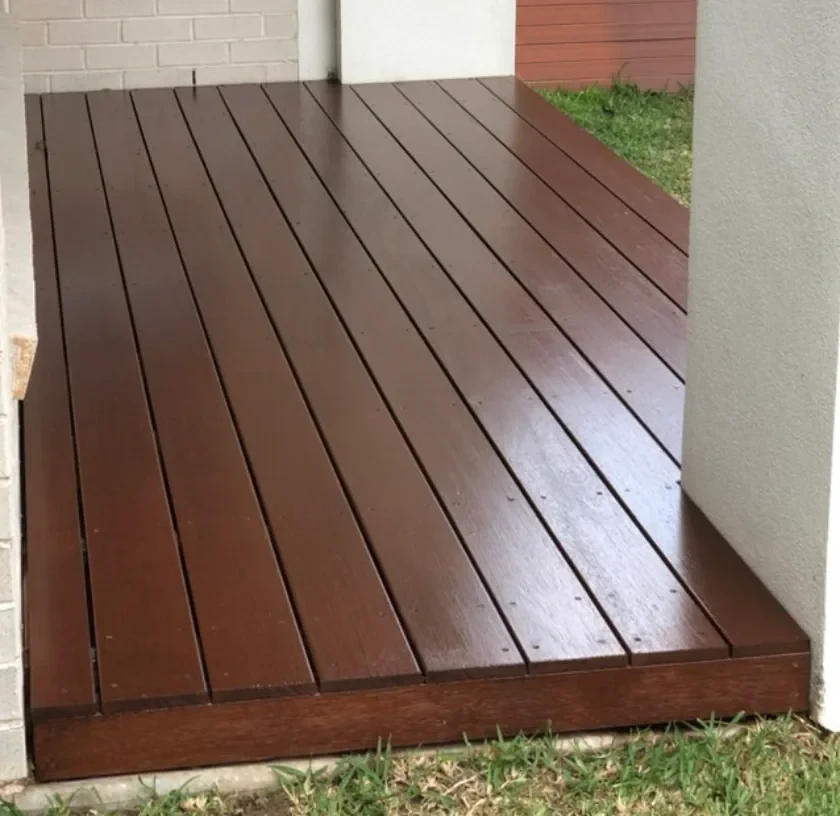
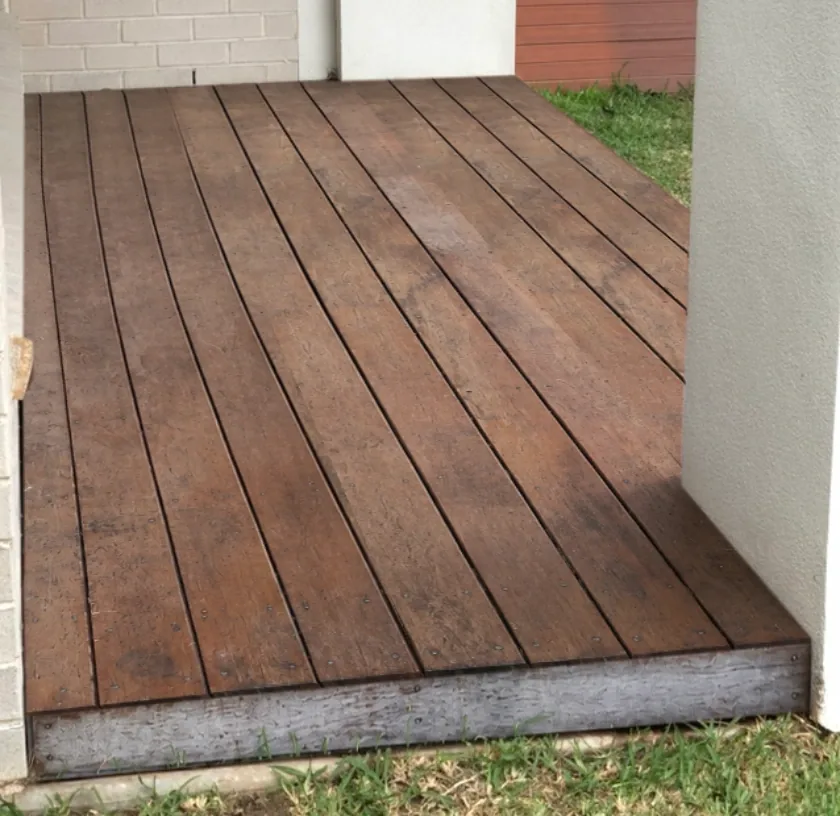
Small side deck, Coogee. Drag the handle to compare before and after.
A deck cops more than any other part of the house. It's flat, so water sits on it, it gets walked on every day, and in Sydney it bakes in the sun. Oil is what keeps the timber fed and protected, and it wears off faster than most people expect. Here's how to tell when yours is due, and how to keep it from getting to the point where it needs a full sand.
How often, by where your deck is
These are typical intervals for a penetrating oil. A water based system or a maintenance coat over a deck in good condition can change them, and so can how hard the deck is used.
Signs your deck is due
- Water soaks in instead of beading on the surface.
- The colour has faded, especially on the boards that get the most sun.
- The timber is starting to look grey or silver.
- The surface feels dry or rough underfoot.
- Black spots or green patches are appearing in the shady corners.
If you catch it at the first two signs, a clean and a maintenance coat is usually all it needs. Leave it until the boards are grey and it usually needs a sand back first, which is more work and costs more.
Deck already gone grey or black? See why deck oil goes grey or black.
Why Sydney decks need it more often
Sun is the big one. Sydney's UV breaks down the surface of exposed timber within months, and the oil goes with it. Near the coast, salt settles on the boards and holds moisture against them. The timber matters too: merbau and spotted gum are hard and oily and hold a coat well, while treated pine is softer and usually drinks more oil, so it can need a bit more attention.
Oiling a new merbau deck
New merbau is full of tannin, the natural dye that bleeds out red brown when it gets wet. Most people let a new merbau deck weather for a few weeks first so the worst of it washes out, then clean it and oil it. Keep in mind the tannin can stain concrete, render and pavers below the deck while it's bleeding.
Oil or a water based maintenance coat?
A penetrating oil soaks into the timber and brings out the grain. A water based system sits more on the surface and dries faster, which helps when the weather isn't on your side. Which one suits depends on your timber, its condition and how much sun it gets. If you're weighing up oil against stain or paint, our deck restoration guide goes through that in detail.
How I do it
Most of the decks I look after just need a proper clean and a fresh coat, sometimes with a light sand on the worn patches and a few minor repairs, like punching down popped nails or refixing a loose board. Where a deck has gone grey, it gets sanded back to clean timber first. I'll tell you which one yours needs when I come and look at it. For typical prices, see our deck restoration page.
Call me on 0416 070 326 and I'll come and have a look.
Frequently asked questions
When should I oil my deck again?
When water stops beading on the surface or the colour starts to fade. For most Sydney decks in the sun that's every 12 to 18 months.
How soon should I oil a new merbau deck?
Usually after it has weathered for a few weeks, so the tannin can bleed out first. Clean it, let it dry, then oil it.
What happens if it rains after oiling a deck?
If rain hits before the oil has dried, it can leave a blotchy or patchy finish. Light rain once it's touch dry is usually fine. If it does mark, a light clean and another coat over the affected boards normally fixes it. Check the forecast and give the oil the drying time on the tin.
How much does it cost to oil a deck?
It depends on the size, the condition and whether it needs a sand back first. See our deck restoration page for typical Sydney prices.
Deck restoration in Coogee · Deck restoration across the Eastern Suburbs